
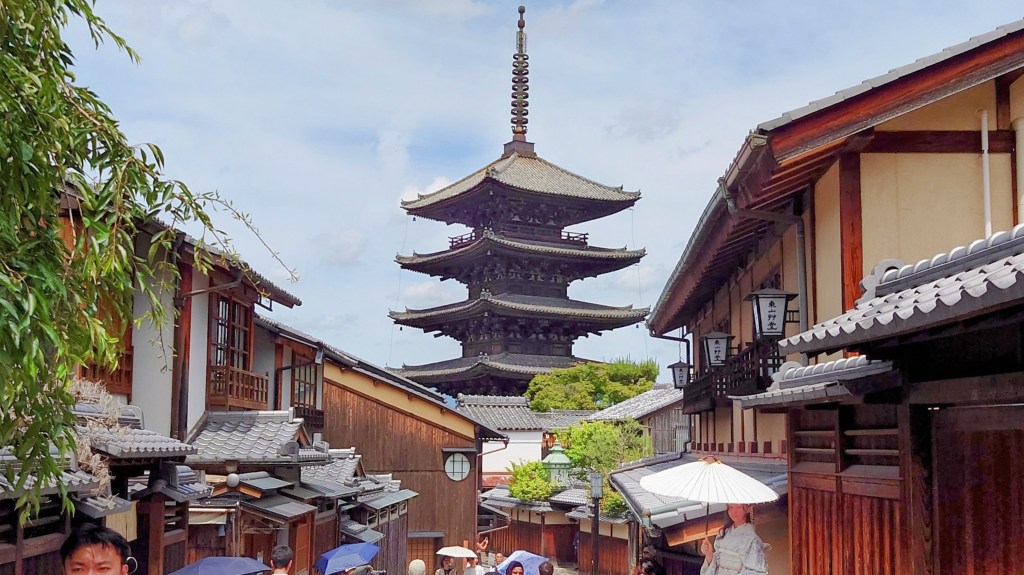
In May and June 2026, my family of 4 (2 adults + 2 children, aged 4 and 1) spent a month travelling through Japan (+Hong Kong and Helsinki). We went to a mix of major Japanese cities and chill seaside towns, living in highly residential areas, trying to live as the locals do. The experience was, in a word, epic – the sort of trip that one would look back on fondly years from now as the starting point of something much bigger.
We’d encountered so many kind, wonderful people, had so much good food and lovely impromptu conversations, enrolled our eldest at a local Japanese nursery for a week, and even navigated a nasty surprise involving our baby stroller. I don’t think I can do it justice by condensing it into a concise trip report, nor do I want to focus on our itinerary because there are a thousand ways to see Japan, so sharing my itinerary which is very specifically tailored to my family offers limited value. So instead, here’re my top 10 Japan travel tips for those with young children to make your journey easier. These should be useful irrespective of where you choose to visit.
Jane’s Top Tips for Travelling in Japan with Young Children
Tip #1: Keep your itinerary very light.
The biggest mistake is packing so much into the itinerary that you end up seeing a lot without actually experiencing much at all.
With very young kids in tow, plan for at most two things on your itinerary each day. This way, you leave room for spontaneous fun that wouldn’t have been possible if you were busy rushing from one point to the next (and won’t sweat it when something inadvertently goes offtrack, as they tend to do with young children).
Our most beautiful memories on this trip were of discovering hidden gems when we had no agenda and just let our feet wander, turning into whichever street looked interesting to us.
For instance, after lunch in Gion (Kyoto) one day, we left the busy thoroughfares and ended up on really quiet streets that were practically deserted. We explored the beautiful architecture and tiny details all around. Suddenly, we found an intriguing bar and we ducked in.
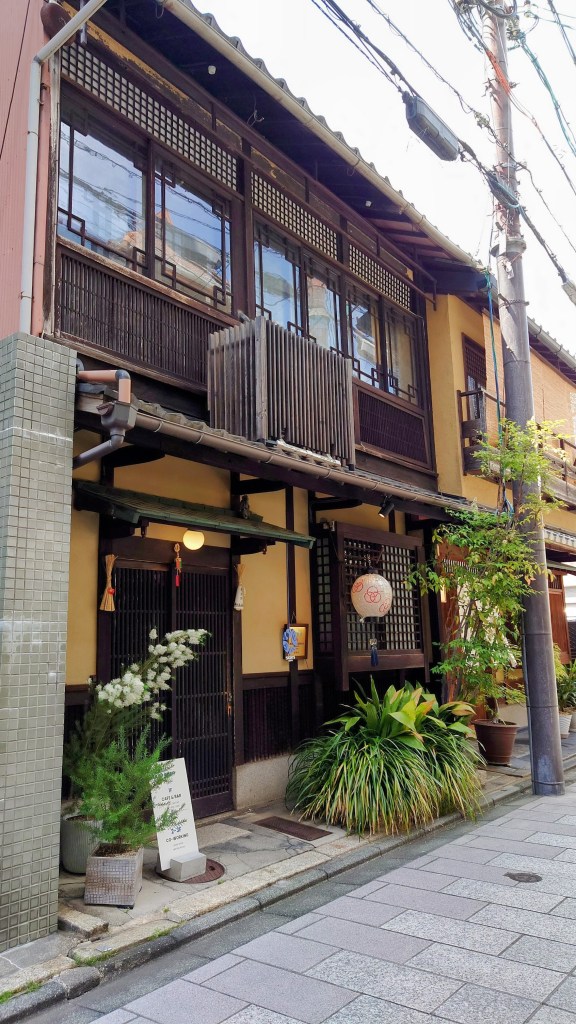
Lo and behold, it turned out to be one of the coolest places we’d encounter all trip. Dimly lit, the classy decor, the chill vibes, the drinks, and the bartender were just delightful! The bar was small and intimate enough that you could easily chat with other patrons and the whole atmosphere was so warm. There were comfy low tables too, perfect for young families. It felt like we’d been spirited away from the oppressive heat to a different world. The bar even had a really beautiful, Japanese-styled coworking space upstairs! There’s no question: the best experiences when travelling are the ones you didn’t plan for, so you should make room for them in your itinerary.
Tip #2: Don’t stay at hotels.
Young children and adults have very different bedtimes. This becomes a problem if you’re in a regular hotel room. You really don’t want to be that parent who has to crouch in the bathroom with your phone after bedtime just because the kids have taken the main/sleeping area.
You’d also want much more space and flexibility when travelling with young kids, so lodging with multiple bedrooms, hang out areas, and a kitchen – think modern houses or machiyas (traditional Japanese houses) – are a great option.
Because a lot of these rental options are in more residential areas, they often end up being comparable in price to a single hotel room in a touristy area (whilst offering triple or even quadruple the amount of space).
Connectivity/access to sights wasn’t an issue despite being in more residential areas, as Japan has excellent transport infrastructure. We were often just 5 mins from a train station.
Residential areas are also great for immersing yourself in a more authentic setting. You experience more of the real Japan this way. Plus, you still have everything you need within walking distance: convenience stores, drug stores, supermarkets, restaurants, etc.
We also found a well stocked, spacious kitchen to be indispensible. As we were travelling in Japan for so long, it was really nice to not have to eat out every night or to deal with boisterous children in a public space, especially at the end of the day when everyone was tired. If you have your own kitchen and dining space, meal times become far less stressful. Japanese supermarkets are very well stocked with both fresh produce and ready made meals so you’re spoilt for choice. Cooking at home often was also gentler on our stomachs – important on a long trip like ours!
If you have very young children (say, under 3yo), be sure that the lodging has childproofed the kitchen space. Our experience was 50/50: although everything we’d booked was marketed as family-friendly, only half of the lodging was actually child-proofed. The worst offender was a flat in Tokyo, where big knives were placed at eye level of a toddler, in an unlocked cabinet beneath the kitchen sink that toddlers can easily open by themselves.
Tip #3: Move between cities using Yamato/Ta-Q-Bin
Unique to Japan, there is a courier service called Yamato/Ta-Q-Bin that can deliver your bulky luggage between cities for a very reasonable fee. You simply drop off your luggage at any of the major convenience stores and fill in some quick forms. This makes travel far more hassle-free, especially when travelling with kids.
Note that there is a size limit for each piece of luggage but majority of luggage that people use when flying/consider checked baggage should just fit within this limit.
Even between major cities like Tokyo and Kyoto, luggage takes at least a day to reach. This is assuming you make the cut-off time, usually 10am, for luggage drop-off. The ideal approach is often to drop off your luggage the morning before you leave a city, packing just an overnight bag for everyone. As you arrive in the next city the following day, your bulky luggage should arrive around the same time (or within the timeframe you’ve stipulated).
The courier service is reputed to be very reliable, but sometimes things can go wrong. We used Ta-Q-Bin’s luggage forwarding service twice. The first time (between Tokyo and Kyoto) was seamless. The second time (between Kyoto and Osaka) the luggage was supposed to be delivered in the morning but only arrived mid-afternoon. I do think we got a bit unlucky there and overall it’s a great service that makes it inter-city travel much easier.
Tip #4: Bring comfy walking shoes
I cannot emphasise this enough: in Japan, you will walk far more than you anticipate, so bring your most comfortable set of walking shoes. A lot of tourists who don’t come prepared develop blisters whilst holidaying here, which is a literal pain when you’re supposed to be having fun.
And if you’re planning to be in Japan for several weeks and your child is very young/moves through shoes sizes quickly, consider bringing an extra pair of shoes that’s the next size up. There’s a lot that you can buy in Japan if you’ve forgotten to pack something, but children’s medicine and shoes from a familar and tested brand are best brought over.
Strollers: a lot of people ask about the ease of getting around in Japan with bulky things like luggage and stroller. The short answer: bring them; you’ll be fine. The long answer: Every single subway and train station we were at had a lift and they were all in working order (ahem, London). Just note that public lifts in Japan are much smaller than those in many other countries and there’s sometimes a queue for them so budget more time for getting around.
Tip #5: Don’t stress about dining
We found it very easy to find family-friendly restaurants outside of the touristy areas so don’t be confined to what’s considered “safe”.
By “family-friendly”, I mean every single restaurant we visited offered children’s cups and cutlery; the menus also often had enough options suitable for young children (eg. less salty). Less common but still possible to find: places that offer high chairs. But booth seats are very common in restaurants, which makes it much easier to keep kids in one place when dining out.
Also, try some of the conveyor belt sushi restaurants! They family-oriented ones can be a lot of fun for the kids as they gamify the plate return process and you get to win small prizes if you’re lucky (or, just pay more per plate you eat to get a guaranteed win for every 3 attempts you make, which worked out great for us). We went to one of Kura Sushi’s Tokyo branches. Happy enough to recommend them!
Tip #6: Souvenirs: think outside the box.
Souvenirs are highly personal, but Japan is a great place to buy some nifty inventions and tools that you can’t source easily elsewhere.
Our favourite acquisitions from this trip include: a Japanese fan jacket, several knives and handmade ceramics.
The fan jacket in particular is light and highly effective during heatwaves. Mine has kept me comfortable even when walking outdoors in 35ºC heat.
Note: there appears to be two types of fan jackets: commercial ones and industrial/professional grade ones used by people working outdoors, the original target audience of this invention.
I went for the latter, so can’t say much about the commercial ones except that they are a fraction of the price of the professional ones but are also a lot less effective apparently, so caveat emptor.
For professional grade jackets, I went to Shokunin Land in Osaka. Professional ones sell components separately (ie. jacket, fan, battery). The top of the line batteries can last 8 hours even when running at top fan speed; highly recommended.
Knives can be easily acquired; you don’t need to go to specialist knife shops unless you’re a knife connoisseur. We bought from a variety of places, and found even the ones from Don Quijote (aka “Donki”) sharp and effective.
But if you’re in Osaka, consider swinging by Sakai, the knife capital of Japan. Sakai produces about 90% of Japan’s professional grade chef knives and a Sakai knife – easily identified by an engraved 「堺」on the blade – has a certain prestige attached to it. Here, a number of smiths offer workshops where you can watch the knife forging, grinding, and handle-fitting process and there is, naturally, a much higher concentration of specialist knife shops than the rest of Japan. Well worth a visit!
Tip #7: Don’t shy away from kids’ recreations just because they’re “for kids”
Japan’s major cities have lots of incredible parks and recreation options for children, including young toddlers. A lot of these places are fantastic/ relaxing/ interesting for adults too! Here’s a list of our children’s favourite play spots:
Tokyo
The Railway Museum
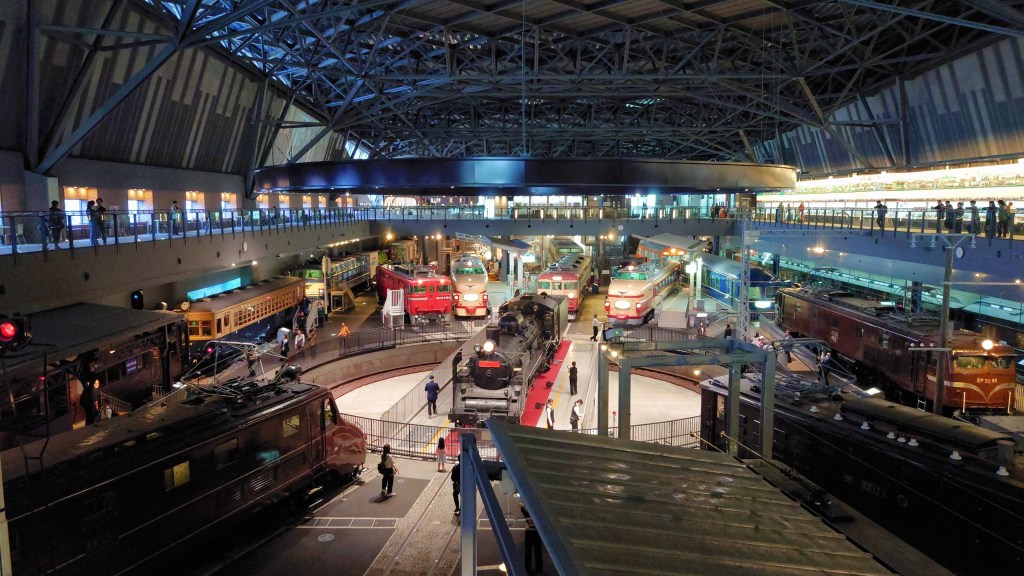
This was an absolute highlight of our trip. Huge museum in Omiya with tons of interesting things for everyone. eg. Lots of real trains from different periods in history that you can board and wander through, ability to get up close to full sized shinkansens, explore mini railway crossings, huge dioramas, train driving simulator, etc.
There are also lots of fun areas specifically for children. Despite how far the museum is from central Tokyo, it’s worth the trip and I recommend budgeting a full day there. Even adults had lots of fun.
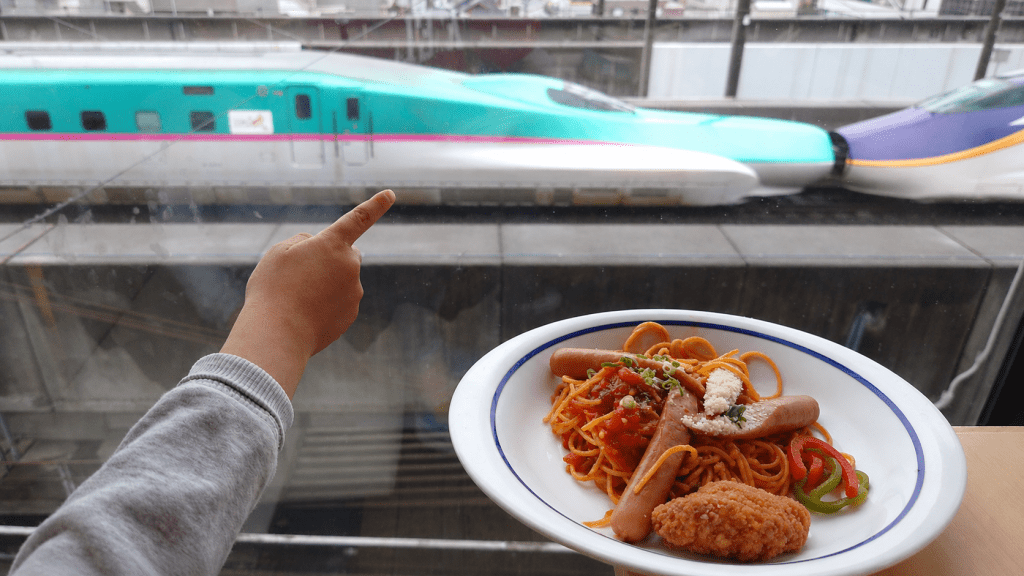
For food, we opted for The View restaurant on the 4th floor of the museum’s South Building. If you want a perfect view of passing shinkansens outside the museum as you eat, then get the booth seats right by the window. A really fun experience for everyone. Note that this restaurant takes cash only, and there are no ATMs on site.
At a set time every day, the steam train in the train display area also does a full 360º rotation. It’s fun for a while but note that if you have young kids, it’s best to stay away as the train whistle is extremely loud – as in “easily heard and startled even if you’re 300 metres away” loud. If you/your children react strongly to sudden noises, get as far away from this display as you can when it’s in action.
Toshima Kids Park
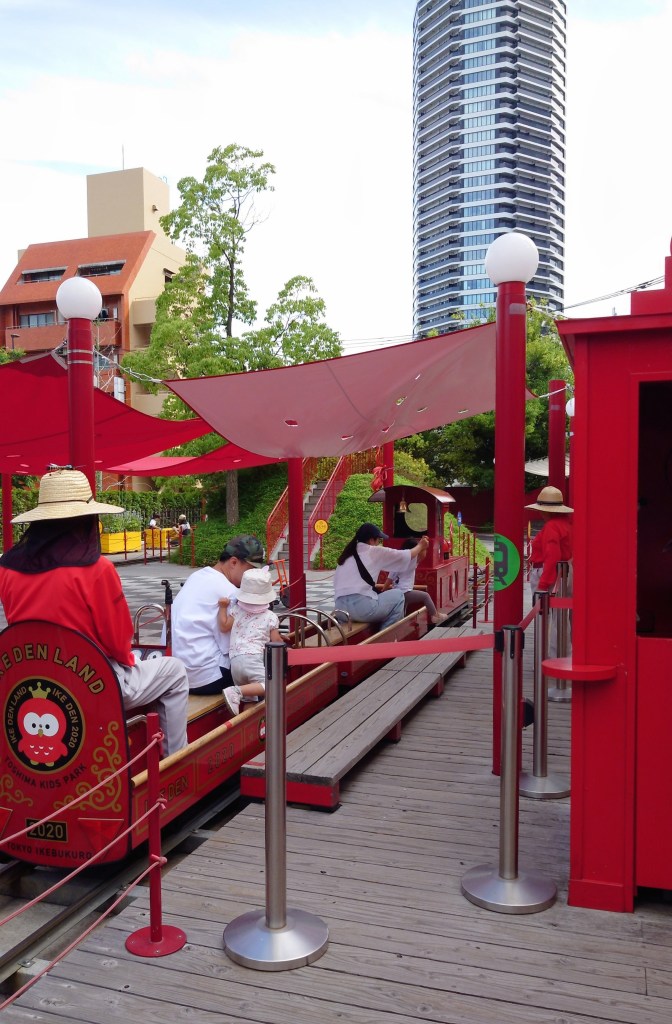
A fun and relaxing spot in central Tokyo, this kids park has an electric train ride that both adults and kids can board. There are also tricycles and different play areas, including one specifically for infants.
It’s one of the few places on our trip where we were able to just let the kids roam on their own, because the space is large enough for children but is staffed and enclosed. Perfect if the adults need a break from running after the kids.
Advance online booking required, though entry is free. Note that it closes fairly early (4pm).
Kyoto
Japan Preschool Exchange Programme
We sent our eldest to a local Kyoto preschool for a full week as part of the Japan Preschool Exchange. This is a fee-paying programme that anyone can enroll in.
Since a key goal of our trip was to let the children experience different ways of life, thinking, etc. this was an excellent way to be immersed in the minutiae of a different culture – to live, eat, play and learn the way they do. My child even got to don the classic Japanese sailor school uniform!

The programme offers a range of nurseries/preschools nationwide to choose from. The logistics are straightforward: before we left for Japan, the programme arranged a Zoom call with our nursery’s headteacher and two programme personnel, including a translator. A translator will also be on hand during drop-off on the first morning, in case you need help communicating with teachers. Throughout the week, teachers take photos of your child and at the end of the week you receive a big batch of photos digitally.
We selected a preschool that has access to a nearby forest. My child absolutely loved this experience. They’d found wild frogs and the joy on his face when he held the frog in his hand was a sight to behold.
Japanese children tend to be much more independent than those in many other countries, and we were delighted to see that our child picked up some good habits from his time in the Japanese preschool, just by being exposed to what other children his age can do on their own.
We were really happy with the decision to enroll in the programme; our eldest was able to experience another way of life in an authentic way and we (adults) were able to explore Kyoto with just our youngest in tow, which was quite liberating.
I do feel that the cost of the Preschool Exchange can be a major consideration as to whether a family considers it worthwhile. The fee for one week on the exchange program is comparable to roughly one month of nursery in London. But if broadening horizons and an immersive school experience in Japan are part of your agenda, I simply don’t know of alternatives to this.
Osaka
Kids Plaza Osaka
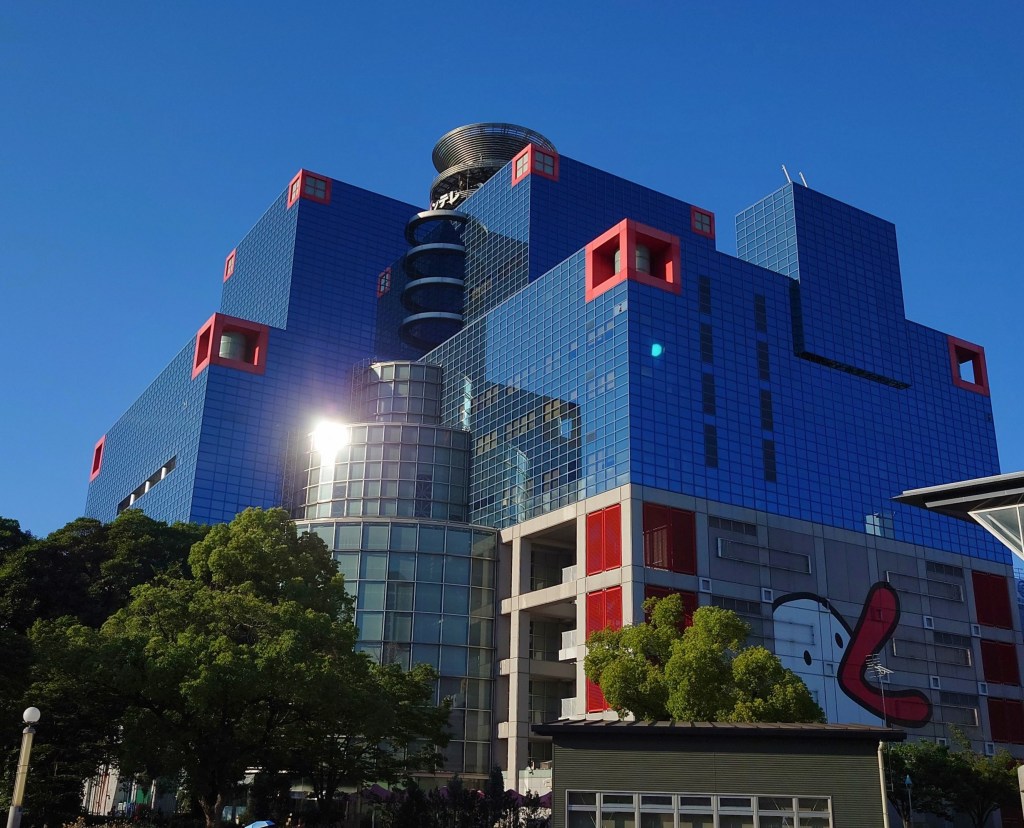
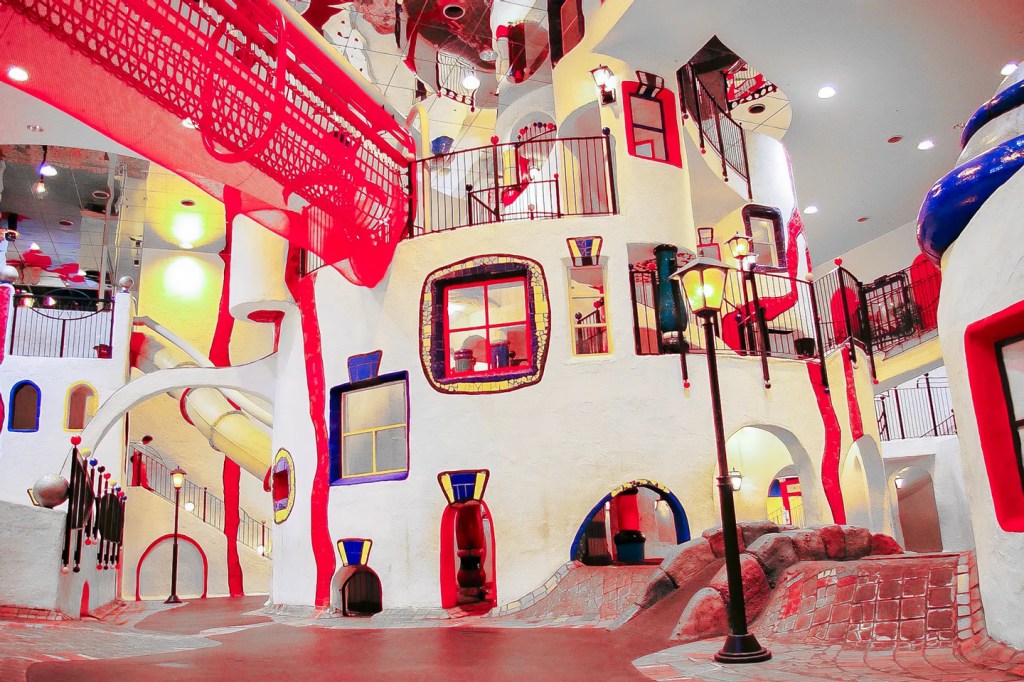
This is a multi-storey kids’ entertainment centre that has everything kids could want – big slides, different terrains to run through, role playing stations (eg. post office, fire station, grocery store, etc.) and STEM-oriented play zones for older children. There’re also several areas separate from the main areas designed for younger infants who aren’t walking yet.

Whilst there, visit the adjacent Ogimachi Park, which has a fantastic playground with some big and highly addictive slides for kids. (Pictured above: only a small portion of the playground)
Harukas 300
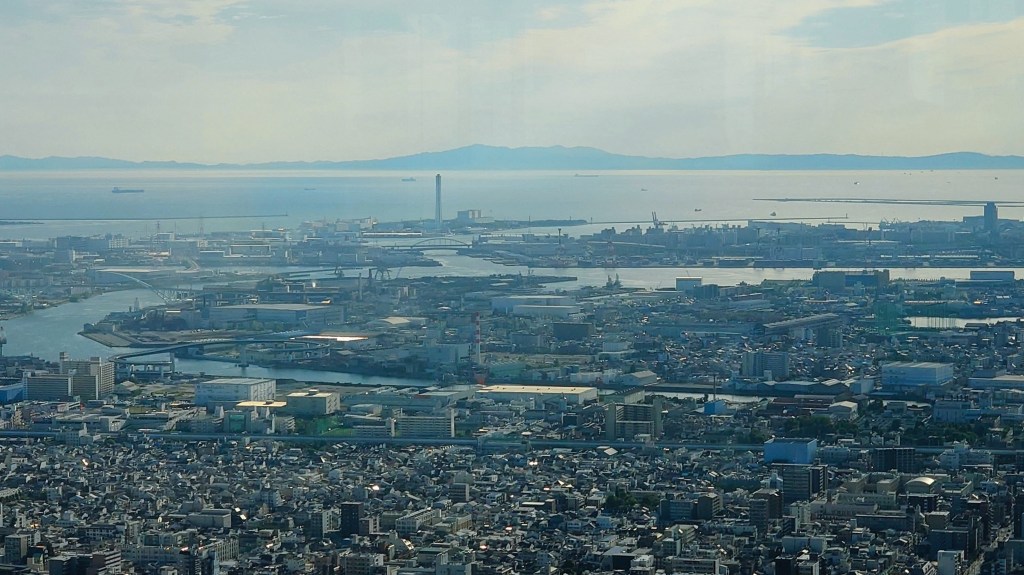
This is Osaka’s highest observation deck. The kids and adults alike loved the panoramic 360º vistas of the city on the 62nd floor. Even the lift ride up was special for the children as there were some cool visual effects. A personal highlight as a parent was looking at the awe and wonder on the kids’ faces as we rode the lift up.
On the 61st floor there’s a semi-outdoor area with lots of dining options. If you’re quick, you can even book a table for barbecue in the evening, though that was all sold out the afternoon we visited.
There’s also a classic Japanese food hall in the basement of this mall/building with a huge array of food stalls. Downsides: very limited seating areas and often crowded, which makes walking through it quite tricky with a stroller.
Osaka Castle
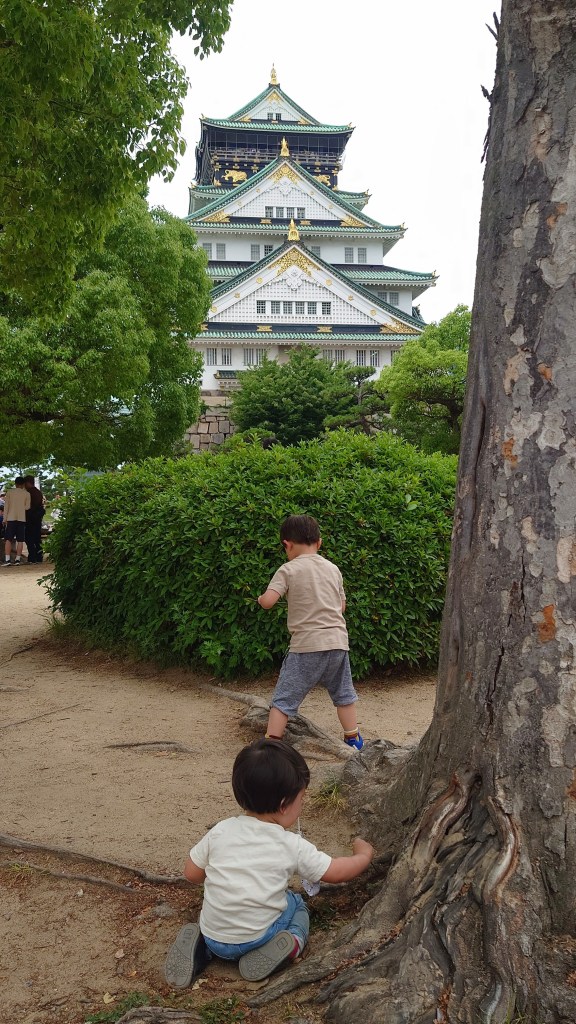
We didn’t bother entering the castle proper due to hearing that it’s cramped and crowded inside. Instead, we opted to let the kids play within the castle grounds and they had a grand time just playing by a tree. Sometimes, the simplest plans are the best.
The castle grounds do get busy really soon so I would highly recommend going at opening time to enjoy the space before the crowds move in.
Tip #8: Look closer

Given how detail-oriented Japanese culture is, there’re often wonderful little surprises hidden in plain sight. Take, for instance, this lovely manhole cover/work of art we found under our feet in Osaka. In fact, you can turn this into a game in every city, as manhole cover designs vary greatly between Japanese cities/districts within a city but they’re all fascinating.
Tip #9: Leverage on AI
Right as we were ready to head out to explore on our first full day in Kyoto, we discovered a big problem. Our all-important Yoyo stroller was broken and missing a part or two, except we didn’t have the technical expertise to troubleshoot. Plus it was a Saturday, so the Yoyo distributor’s office was closed. All we knew was that the problem looked serious and the stroller probably couldn’t be used.
What would you have done a few years ago in this situation? Run around a few stroller stores to see if they can help/have spare parts, come up empty, then resign to buying an emergency stroller out of desperation? You’d also probably either bin the broken stroller (what a waste) or lug it around for the rest of your trip so it can be repaired back home (what a hassle).
But in the age of AI, this dilemma turned out to be just a small inconvenience. I simply took a photo of the problem, asked AI for a technical diagnosis and received instructions on which large hardware store to go to and what to say in Japanese to the staff so they could find the parts needed to fix the issue. Twenty minutes and £0.14 later, the stroller was working perfectly again.
When you’re out of your depth in a foreign country, the all-seeing eye of AI can be your friend.
Tip #10 Start your trip somewhere other than Tokyo
If you’re flying long haul to reach Japan, I strongly recommend starting your trip somewhere other than Tokyo. Children coming off a long flight will have particularly bad jetlag. If you put them in a big, action-packed urban jungle like Tokyo, it can be an overwhelming start for them. And if they’ve made up their minds that they don’t like this place early on, it might make the rest of the trip harder for everyone.
Tokyo is also a very dense city with a population of 37 million, and it understandably moves at its own pace (read: fast and orderly). There are many unwritten rules about what is considered appropriate conduct in public (ie. do not disturb the peace or inconvenience others) and whilst this is true in all of Japan, you will feel this more acutely in the capital. Travelling with a few boisterous young children can be tricky and navigating the busy trains and massive metro stations (some with over 20 platforms) can be stressful.
The better way to see Japan is to start somewhere with a slower pace and with plenty of outdoor space. The more time you spend outdoors in the day, the sooner you recover from jetlag – great for kids and adults alike. If Tokyo must be on the itinerary, leave it till the end so you can fly home from Narita/Haneda.
My family chose to start our trip at a gentler location: a chill seaside town with a short connection to an international airport. We went there directly as soon as we landed. The place had beaches, bamboo forests, and plenty of outdoor sights.
The approach worked great – our eldest raved about that first town throughout the whole trip. This strategy of “start somewhere smaller, gentler, less stimulating” can be applied to virtually any international airport you arrive at in Japan.
And that’s a wrap! As you could probably guess, I’d ommitted tons of highlights – amazing bars, restaurants, shops, hidden finds, etc. – in this piece because they didn’t relate to children, but I had to be disciplined and focussed solely on tips for young families (or else this post would’ve been outrageously long).
All in all, if you go slow and take the time to look, immerse, and chat with the locals, Japan will probably amaze you in the best of ways.
I’ll write a separate post on our trip to Hong Kong with the kids and how we created a more immersive environment for them to practice Chinese. If you have questions about the Japan trip, drop them in the comments section below. Until the next post!
